History hub
History is strongest when we show how we know it
17 chapters across the Getic, Dacian, Thracian and Roman worlds, with sources, confidence and competing interpretations.
Confidence rates the claim, not the worth of a culture, person or source. Ancient authors can be direct witnesses and still be biased, late or rhetorical.
How our evidence system works →Trajan’s Column: The Dacian Wars — Interactive Evidence Atlas →
Chapters
Choose a period
01 · c. 6000–1000 BCE
Deep Context
Before the Getae and Dacians
A long human story in the region — told without inventing ethnic continuity.
02 · 5th–1st c. BCE
The Getae
Getae in the early literary record — and the naming problem
What Greek writers saw, what they misunderstood, and why “Geto-Dacian” is a modern convention.
03 · 2nd c. BCE – 1st c. CE
Dacian Kingdom
From Iron Age communities to political centralisation
Elite competition, fortified heights and the rise of a mountain power centre.
04 · c. 82–44 BCE
Burebista
Burebista and Deceneus
A powerful ruler, a priest-adviser — seen almost entirely through Strabo.
05 · 1st c. BCE – 106 CE
Sarmizegetusa Regia
A mountain metropolis?
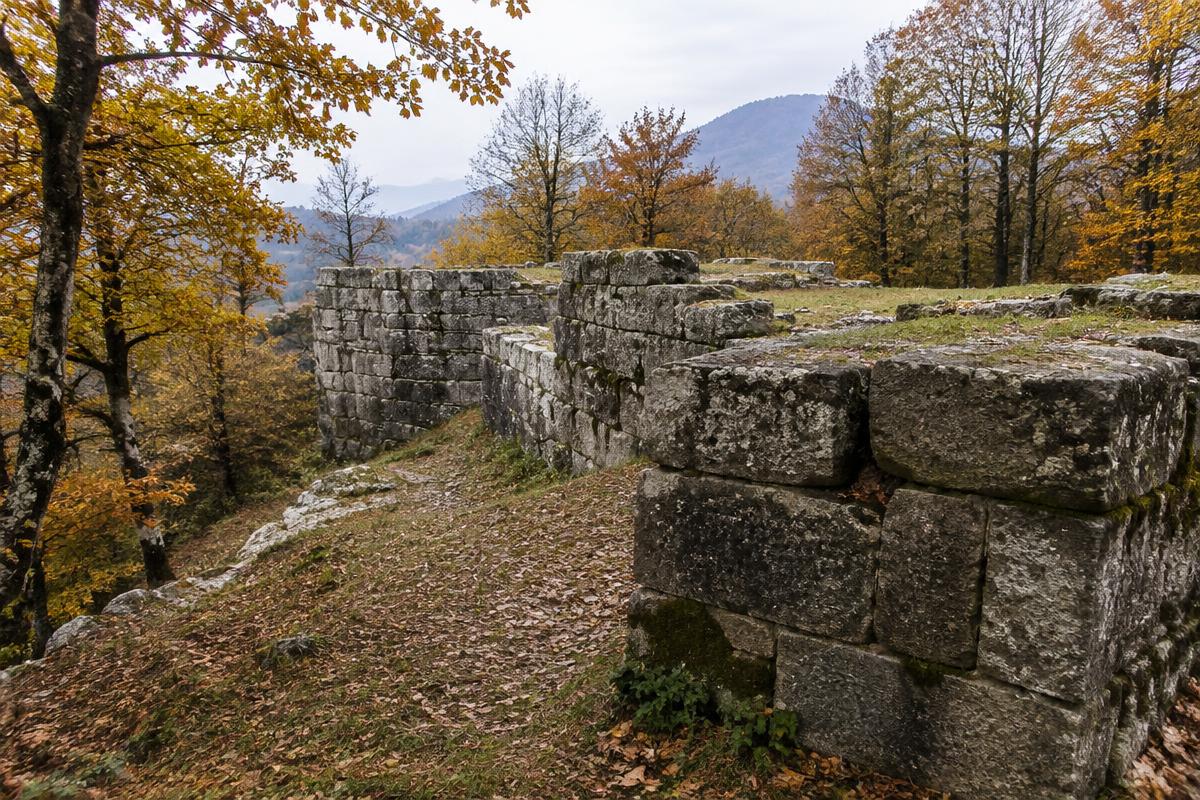
Fortresses, thousands of terraces and serious engineering in the Orăștie Mountains.
06 · 2nd c. BCE – 106 CE
Regional Dacian Centres
Beyond Sarmizegetusa and the six fortresses
The Dacian world was not only the Orăștie core. Regional centres differed in architecture, ritual, economy and political role.
07 · 5th c. BCE – 1st c. CE
Religion & Ritual
Sanctuaries, Zalmoxis and gods without faces
Strong evidence for organised cult — and very little for doctrine.
08 · Late Iron Age
Daily Life
Food, craft, gold and coins
What might have been on the table — and what looting has taken from us.
09 · Late Iron Age – 106 CE
Warfare
Beyond the falx myth
Real weapons, Roman images — and the gap between them.
10 · 101–106 CE
Roman Conquest
Decebalus, Trajan and the wars
Three tracks: ancient narrative, archaeological landscape, Roman imagery.
11 · 106–c. 275 CE
Roman Dacia
Conquest and transformation
Two Sarmizegetusas, two political systems, two locations.
12 · 106–c. 275 CE
Roman Dacia: People & Everyday Life
Mines, contracts, kitchens, graves and gods
Roman Dacia was a lived society, not just forts and administrative dates. This is a Roman provincial world — distinct from pre-conquest Dacian political identity.
13 · Late 3rd – 5th c. CE
After Roman Dacia
Abandonment, reuse and change
The withdrawal of Roman administration was a political and military event, not a single archaeological ‘off switch’.
14 · 19th c. – today
Modern Reception
Modern Reception & Claims
How the Dacians have been imagined — analysed respectfully, kept apart from ancient history.
15 · Case study
Contested Evidence
The Sinaia Lead Plates
Neither censored nor endorsed.
16 · Iron Age – Roman period
Language & Epigraphy
Names, glosses and inscriptions — a fragmentary record
Thracian and Dacian linguistic evidence is fragmentary; there is no established complete decipherment.
17 · First millennium BCE
Thracian & Lower Danube Worlds
Getae, Odrysian formations and Bulgarian archaeology
Changing regional communities, political formations and exchange networks — not one timeless homogeneous population.
Myths vs evidence
Trace a popular claim
Follow a claim from its earliest testimony to what remains unknown.